
How Pranayama Affects Your Nervous System

Pranayama is often described as calming, energising, or balancing. While those descriptions are not wrong, they are vague. What pranayama actually does is influence the nervous system, and understanding how matters for both safety and effectiveness.
Breath is one of the few systems in the body that is both automatic and voluntary. This makes it a direct access point to the nervous system.
The Nervous System in Simple Terms
The autonomic nervous system has two primary branches. The sympathetic nervous system supports alertness, mobilisation, and action.The parasympathetic nervous system supports rest, digestion, and recovery.
Both are always active to some degree. Health is not about staying calm all the time. It is about the ability to move between states appropriately. Pranayama influences this balance by changing breathing rhythm, depth, and effort.
How Breath Signals the Nervous System
Fast, forceful, or held breathing tends to increase sympathetic activation. This can feel energising, stimulating, or clarifying, but it can also increase anxiety if not used appropriately.
Slow, steady breathing with longer exhales tends to support parasympathetic activation. This can reduce physiological arousal and support regulation.Neither response is inherently good or bad. Context matters. Pranayama is not about forcing relaxation. It is about using breath intelligently to support the desired state.
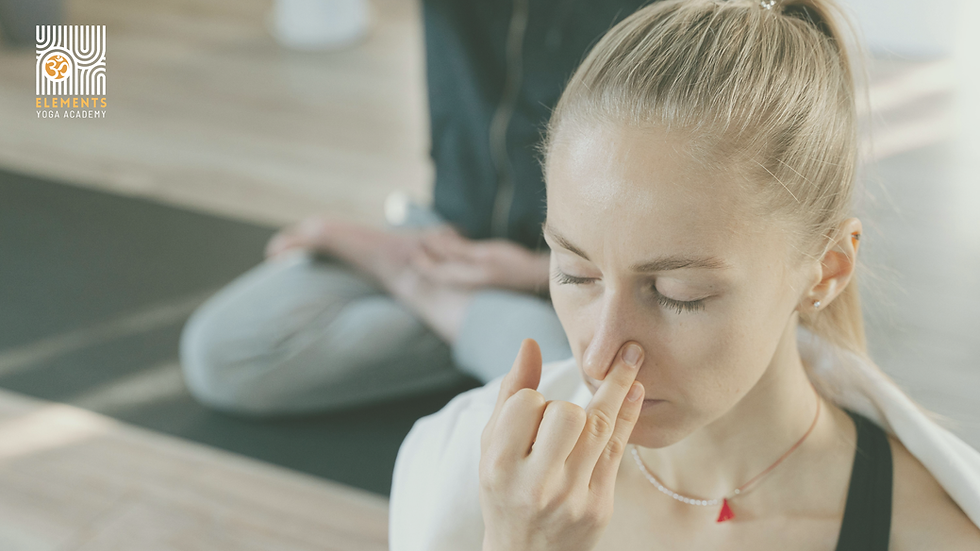
Why Pranayama Doesn’t Work the Same for Everyone
Nervous systems are shaped by stress, health history, trauma, sleep, and lifestyle. A breathing technique that feels grounding for one person may feel overwhelming for another.
This is why blanket instructions to “slow the breath” or “calm the nervous system” can be unhelpful or even counterproductive. Skillful pranayama is responsive. It adapts to the individual rather than assuming one outcome fits all.
Awareness Before Control
One of the most overlooked aspects of pranayama is awareness. Before changing the breath, it is essential to notice it. How fast is it? Where is the movement? Is there tension or ease?
Without awareness, breathwork becomes mechanical. With awareness, it becomes regulating.
The nervous system responds not just to breath patterns, but to the relationship we have with them.
Pranayama as a Practice of Regulation
When taught and practised well, pranayama builds flexibility in the nervous system. It supports the ability to shift states rather than getting stuck in one.
This is what makes pranayama powerful, and also why it should be taught with care.
It is not a shortcut to calm. It is a skill that develops over time.
At Elements Yoga Academy, we teach pranayama as a nervous system skill, grounded in physiology and real human experience rather than one-size-fits-all techniques. To learn more about our approach to yoga education and teacher training, visit elements-academy.com.au.


Comments